
Of all the stories I have taken inspiration from over the years, this is perhaps the most ancient.
The Epic of Gilgamesh is widely regarded as one of the oldest surviving works of literature, with its origins dating back over 4,000 years.
It's a sprawling, fantastical tale, filled with extraordinary adventures, fearsome beasts, angry gods and otherworldly happenings. Yet beneath all of this, I believe there are some remarkably human truths, which perhaps explain why the story has endured for so long.
In fact, it fascinates me just how relevant some of its lessons feel to the world we find ourselves in today.
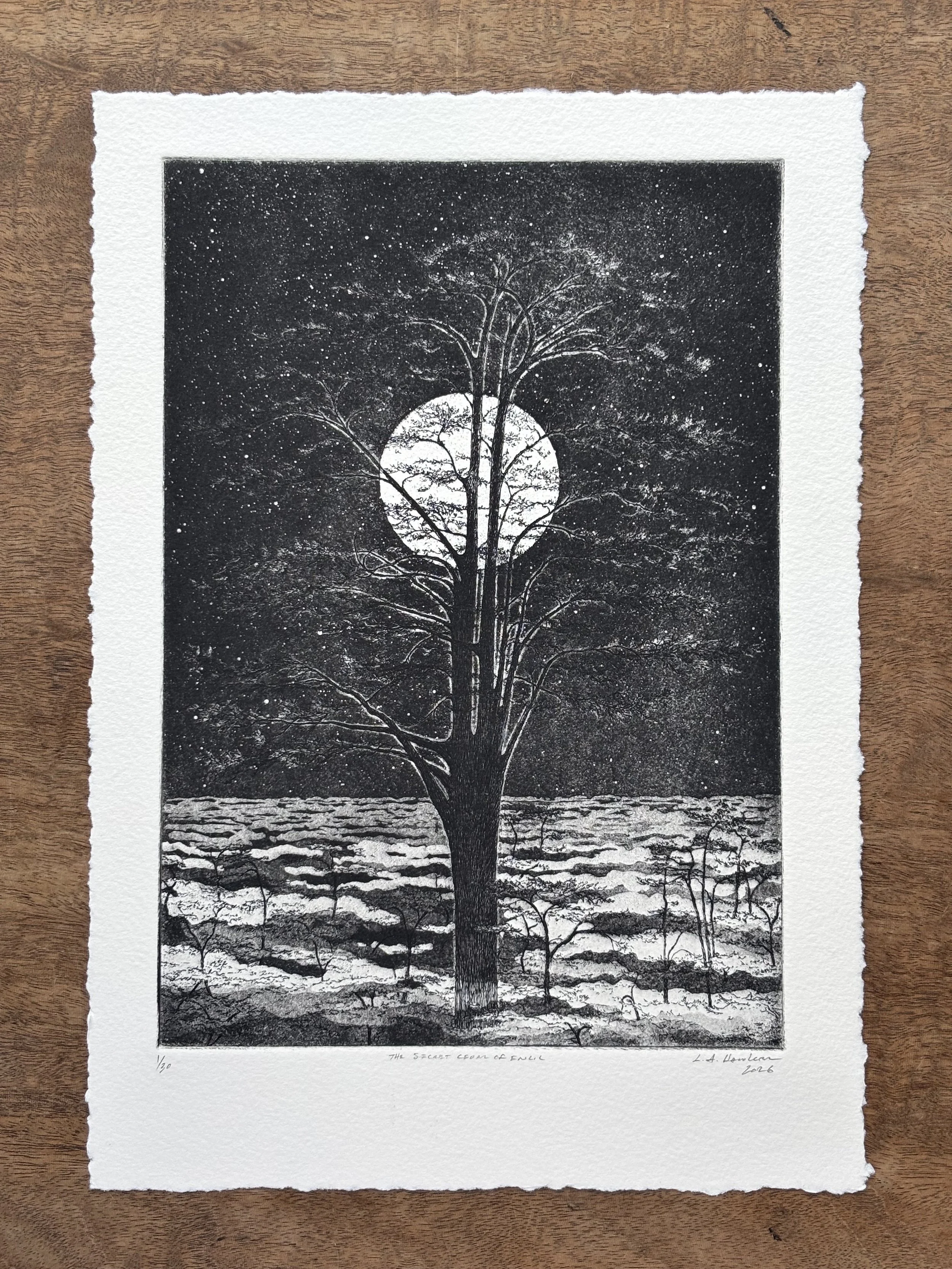
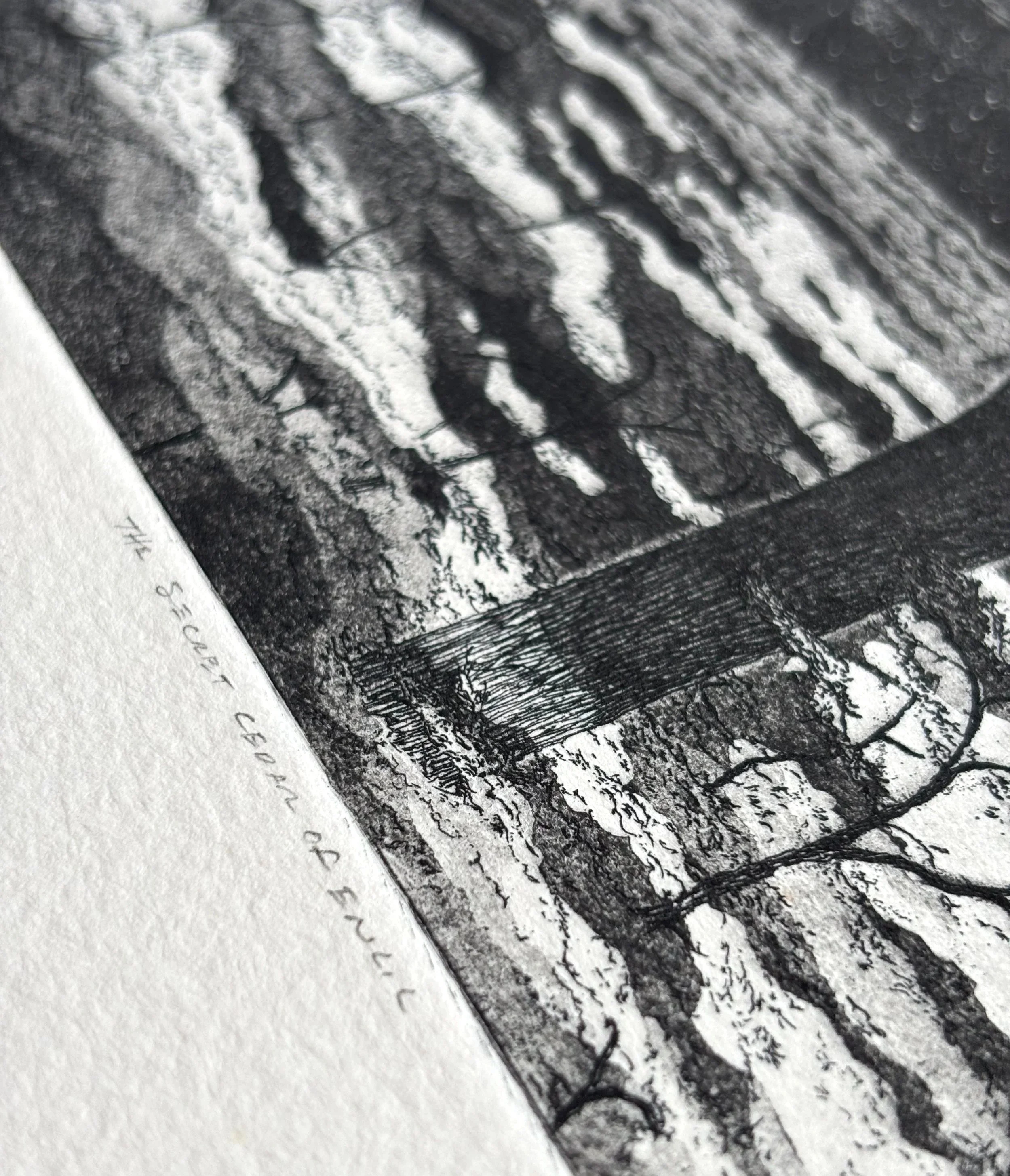
The story in its entirety is indeed epic, but there is one particular part that has stayed with me, and it became the inspiration for my latest artwork, The Sacred Cedar of Enlil.
-
In his quest for fame and a legacy, King Gilgamesh sets off with his companion Enkidu on a journey to the sacred Cedar Forest.
They see the forest solely as a means to fulfil their ambitions, setting out to fell its mighty trees and return with the prized timber, securing their place in history through their so-called “heroic” deeds.
Its towering cedars are sacred to the gods, and among them stands an enormous tree, its canopy reaching towards the heavens.
The forest is protected by Humbaba, a fearsome guardian appointed by king of all gods Enlil.
Despite being portrayed as a terrifying monster, Humbaba is, in fact, simply protecting the forest entrusted to him.
And perhaps this is where the story becomes most interesting.
Gilgamesh and Enkidu enter the forest, begin felling its sacred trees and ultimately kill Humbaba.
Victorious, they return with the precious cedar timber, having conquered the forest and its guardian.
There is a remarkable irony in what follows.
The felled cedar is used to construct an enormous doorway for the temple of Enlil, the very god who had appointed Humbaba to protect the forest in the first place.
A monument to a god, created through the destruction of something he had wished to preserve.
Gilgamesh sought immortality through his achievements, yet his pursuit of glory set in motion a series of events that would ultimately bring tragedy.
And I can't help but wonder, who was really the monster in this tale?
The guardian protecting the forest, or the heroes who destroyed it?
-
For this artwork, I wanted to capture the forest as it might have appeared on the night before the arrival of Gilgamesh and Enkidu.
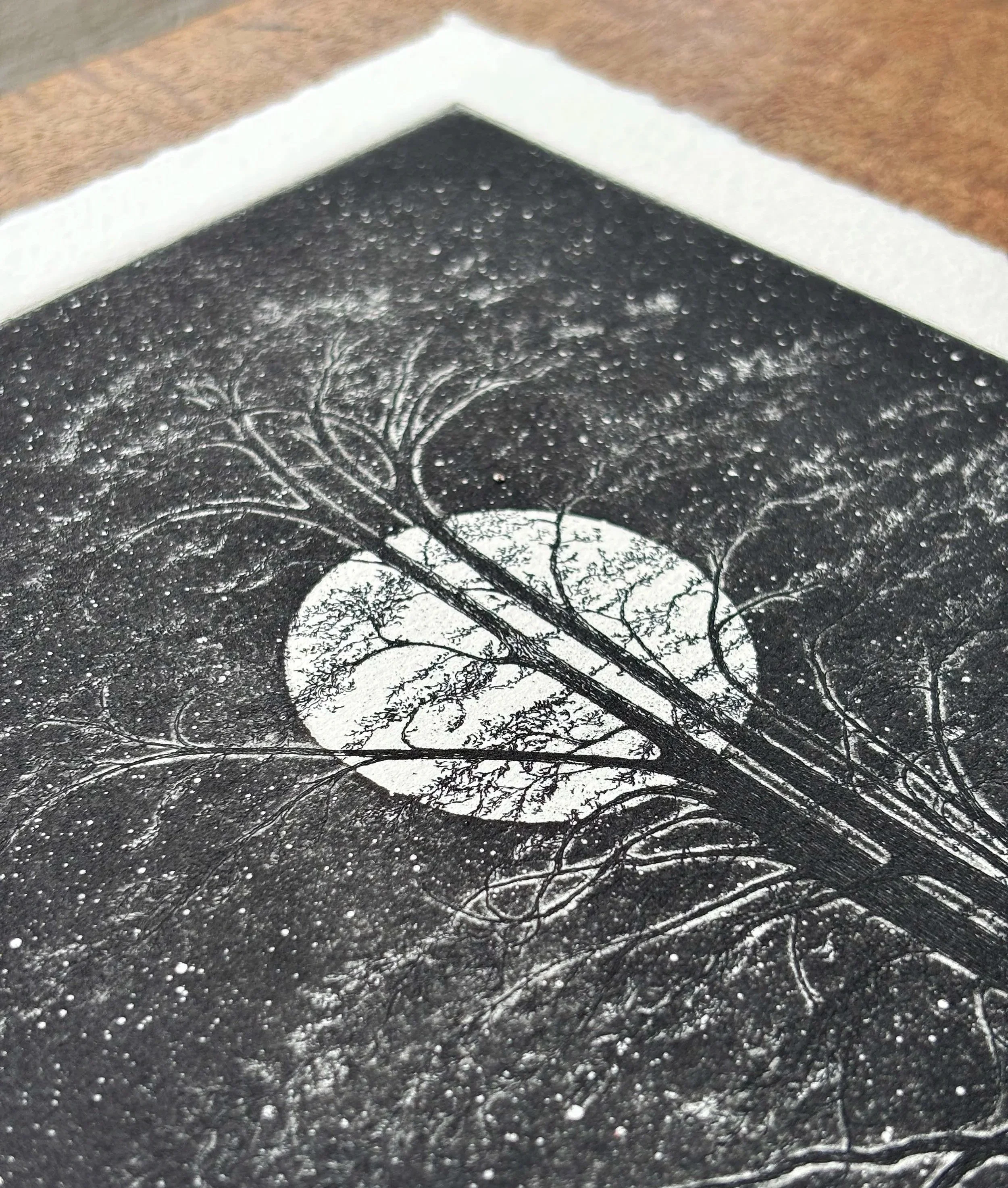
At its centre stands the great sacred cedar, towering above the surrounding forest, its immense canopy reaching towards the heavens.
Above hangs the moon, representing Sin, the Mesopotamian moon god and son of Enlil, the King of all gods.
Rather than depicting the violence and destruction for which this part of the epic is remembered, I wanted to capture the stillness before it all unfolds.
The forest is pristine, untouched and unconquered.
Although this story is thousands of years old, its parallels with our own world are difficult to ignore.
We continue to celebrate humanity's achievements, often without considering what has been sacrificed to make them possible.
At it’s heart, this story reveals the truth around legacy, reminding us that perhaps the greatest legacy we can leave behind is not always something we build or conquer, but something we choose to preserve.
-
Limited to just 30 editions, The Sacred Cedar of Enlil will be available exclusively to my collectors.
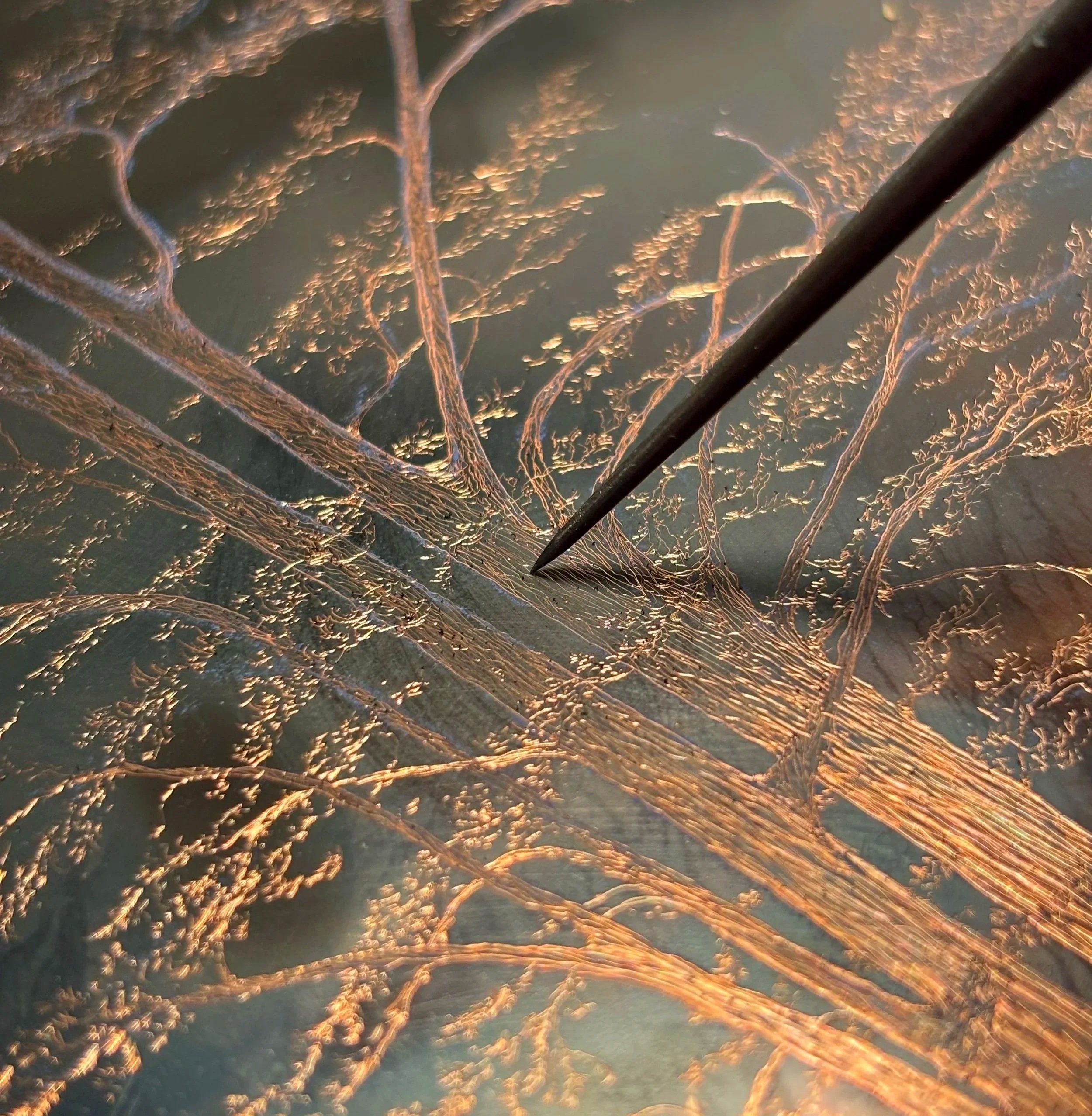
Copper Point Etching - Edition of 30
Plate Size : 170mm x 245mm (6.7”x 9.6”)
Paper Size : 210mm x 300mm (8”x 12”)
Paper : Velin D’Arches 400 gsm
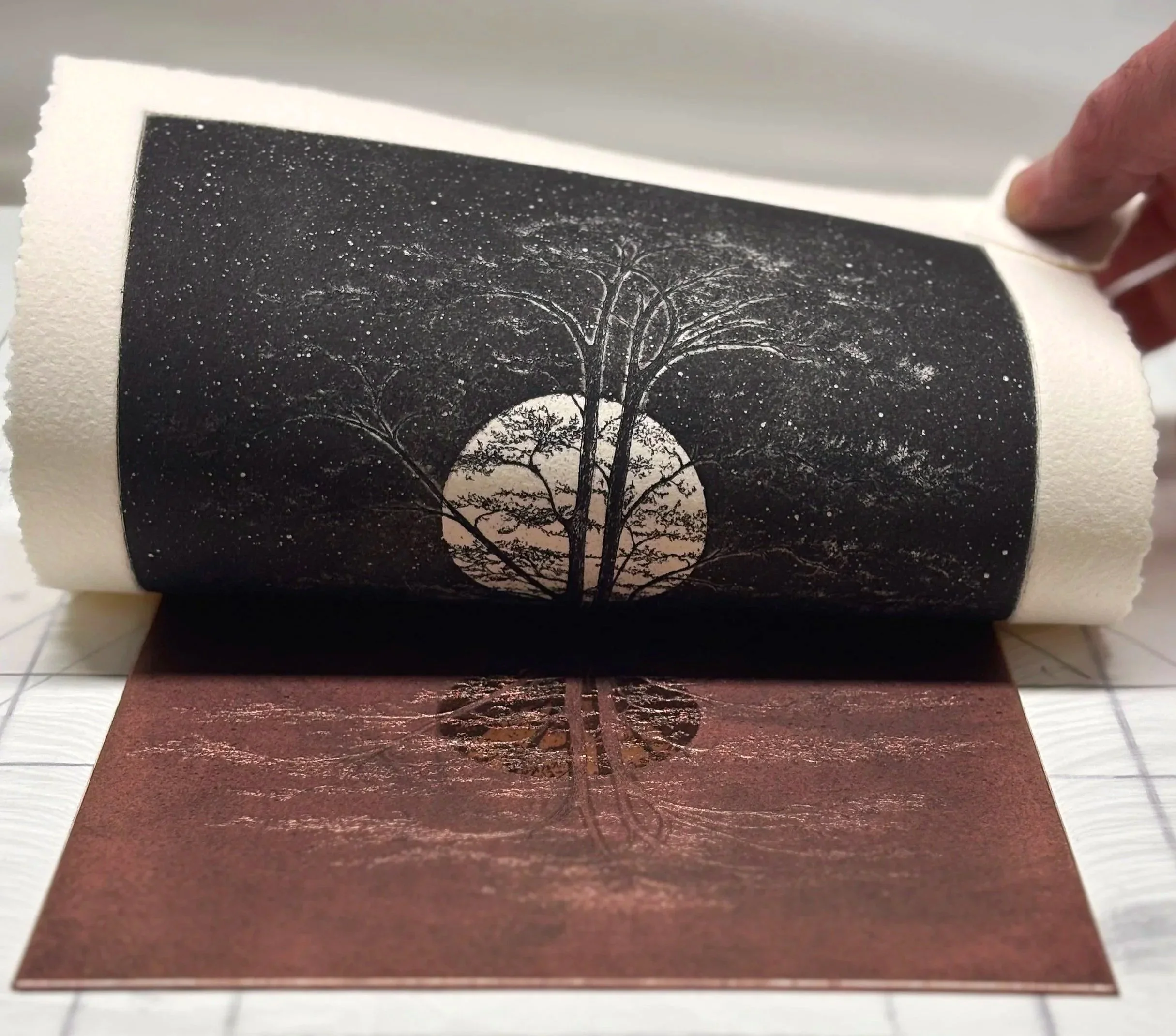
Each etching is hand-printed from the copper plate, signed, titled, and numbered, accompanied by a certificate of authenticity.


